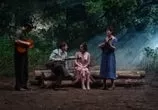
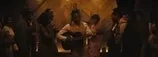
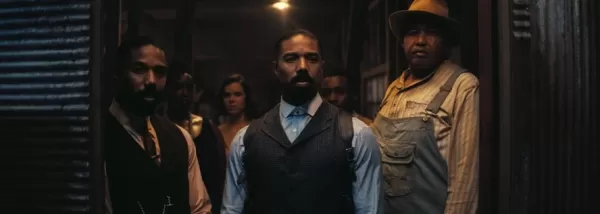
While Ryan Coogler's new film Sinners presents itself as a vampire horror story, its true cinematic brilliance lies in vividly recreating 1930s Mississippi while using blues music – historically condemned as "the devil's music" – to explore its predominantly African-American characters' lives, led by Michael B. Jordan's dual roles as twin brothers Smoke and Stack.
"Beyond its vampiric thirst for hemoglobin, Sinners pulses with musical energy from its opening blues performances by Sammie [Miles Caton] and local legend Delta Slim (Delroy Lindo) at Smoke and Stack's establishment," Eric Goldman noted in his glowing review for IGN.
"Coogler transforms these performances into portals exploring music's universal power to connect generations, often unconsciously preserving cultural legacies. Vampire leader Remmick (Jack O'Connell) creates fascinating parallels with stellar blues soundtrack through ancestral Irish folk melodies that gradually take center stage."
Coogler masterfully contrasts African-American blues and Irish folk traditions as musical metaphors for shared colonial traumas between humans and vampires. Both genres receive breathtaking performance sequences that Goldman describes as making Sinners "musically adjacent" and "demonstrating how sound immortalizes its creators across generations."
During my conversation with Coogler, we discussed Sinners' musical foundations, its standout sequences, and why vampire antagonist Remmick became as personally significant for the director as Killmonger in Black Panther.
IGN: What cultural significance does blues music hold for this world and its characters?
Ryan Coogler: For these characters, blues represents full humanity's affirmation. Historically condemned yet inseparable from Black church culture, it acknowledges aspects faith often omits – carnal desires, anger, physical suffering. Where church elevates the spirit, blues celebrates both flesh and soul without judgment.
The juke joint becomes a sacred space embracing flaws and desires impossible to express working cotton fields. There's raw honesty when singers confess "I'm married but want this woman" – no hypocrisy, just human complexity.
IGN: How did you approach creating vampire society's racial dynamics?
Coogler: Like Killmonger, Remmick emerged from deep personal connection. I wanted audiences meeting an individual vampire whose group develops organically. His unexpected racial perspective – genuinely identifying with oppressed people rather than mimicking their oppressors – felt thrillingly unexplored.
IGN: The musical sequences become breathtaking cinematic events.
Coogler: They're the film's heartbeat. Consider Irish stepdance's rigid form emerging from prohibition, mirroring blues born from oppression. When Remmick chooses Clarksdale's juke joint over aristocratic halls, that purposeful defiance electrified our creative process.
IGN: The juke joint one-er particularly dazzles with its temporal play.
Coogler: Cinema uniquely conveys that transcendent musical moment when virtuosity shatters reality. Our tools could capture what words fail - explaining why juke culture mattered for people denied freedom yet determined to create joy their descendants might share.
IGN: The vampiric Irish sequence equally stuns.
Coogler: Irish folk's brilliance lies in singing tragedy with exhilarating energy. Both cultures developed musical codes – singing truth beneath oppressors' notice. When Remmick recognizes kindred spirits across racial lines, that revelation fuels the film's power.
25 Greatest Vampire Films Ever Made
 26 Images

Sinners Behind-The-Scenes Gallery
 12 Images