 Steam mandates all developers to disclose their game's use of the controversial kernel-mode anti-cheat system. Learn more about this significant Steam platform update and the implications of kernel-mode anti-cheat.
Steam's New Anti-Cheat Disclosure Tool
Mandatory Kernel-Mode Anti-Cheat Disclosure
 Valve's recent Steam News Hub announcement introduces a developer feature for transparently disclosing in-game anti-cheat systems. Accessible via the Steamworks API's "Edit Store Page," this allows developers to specify anti-cheat software usage.
While disclosure for non-kernel-based anti-cheat remains optional, kernel-mode anti-cheat declaration is now mandatory. This addresses community concerns about the potential intrusiveness of such systems.
 Kernel-mode anti-cheat, which directly examines player device processes to detect malicious activity, has generated considerable debate. Unlike traditional methods focusing on in-game patterns, kernel-mode solutions access low-level system data, raising concerns about performance, security, and privacy.
Valve's action reflects feedback from both developers and players. Developers sought clearer ways to communicate anti-cheat details, while players demanded increased transparency regarding anti-cheat services and any associated software installations.
 Valve's official Steamworks blog post states: "We’ve heard from developers seeking better ways to share anti-cheat information. Simultaneously, players have requested more transparency about anti-cheat services and additional software installations."
This update benefits both parties: developers gain a streamlined communication method, and players receive clearer information about game software practices.
Mixed Reactions to the New Transparency Feature
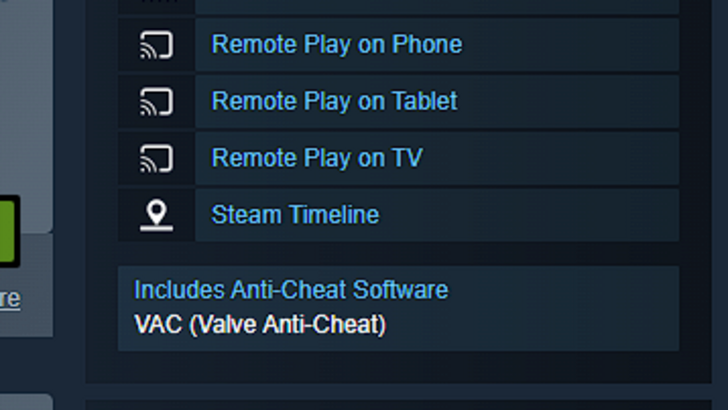 Launched October 31, 2024, at 3:09 a.m. CST, the update is live. Counter-Strike 2's Steam page, shown above, now clearly displays its use of Valve Anti-Cheat (VAC).
While many applaud Valve's "pro-consumer" approach, criticism exists. Some users pointed out grammatical errors in the display, and others found Valve's wording—particularly the use of "old" for games updating this information—unclear.
 Practical questions arose regarding language translation of anti-cheat labels and the definition of "client-side kernel-mode" anti-cheat, exemplified by PunkBuster. The debate surrounding the invasiveness of kernel-mode anti-cheat continues.
Despite initial mixed reactions, Valve's commitment to pro-consumer platform changes is evident, highlighted by their transparency regarding a recent California law protecting consumers from misleading digital goods advertising.
Whether this fully addresses community concerns about kernel-mode anti-cheat remains to be seen.